A Peanut Builds a Bridge of Cooperation - Shandong Runbai Agriculture Creates a New Benchmark for Win-Win Agriculture between China and Pakistan
A Single Peanut Bridges Cooperation
Shandong Runbo Agriculture Creates a New Benchmark for China-Pakistan Agricultural Win-Win Cooperation
I. Case Introduction
As a benchmark enterprise for agricultural "going global" in Weifang National Agricultural Comprehensive Development Zone, Shandong Runbo Agricultural Technology Co., Ltd. has deeply integrated into the "Belt and Road" initiative and the China-Pakistan Economic Corridor construction with its independently developed high-oleic acid peanut varieties as the core carrier. By establishing an integrated peanut breeding, propagation and promotion base in Pakistan, exporting high-quality seeds, advanced technologies and scientific management models, it has achieved a breakthrough in doubling local peanut yield and improving quality. Meanwhile, it has built a cooperative closed-loop of "variety cultivation-large-scale planting-two-way trade", not only becoming a model for China-Pakistan agricultural technology cooperation, but also expanding into multiple cooperative fields such as potato tissue culture and cotton breeding, setting a new benchmark for agricultural capacity integration between the two countries.
II. Detailed Case Introduction
Shandong Runbo Agriculture is a national high-tech enterprise and a director unit of the Peanut Professional Committee of China Green Food Association. Relying on the scientific research advantages of Weifang Key Laboratory of High Oleic Acid Peanut Breeding, it has long been engaged in the breeding and promotion of peanuts and other crops, and has developed multiple high-quality varieties with independent intellectual property rights. Since 2016, with the help of the open platform of Weifang National Agricultural Comprehensive Development Zone, the enterprise has started to explore agricultural cooperation with Pakistan and became a candidate enterprise for agricultural projects in the China-Pakistan Economic Corridor in 2022.
After years of variety adaptation cultivation and experiments, 13 new high-oleic acid peanut varieties of Runbo Agriculture, such as Runhua 12, Runhua 17 and Runhua 19, have successfully passed the approval for trial planting by the Pakistani Ministry of Agriculture. These varieties have shown strong regional adaptability. In 2023, in the 1,000-mu experimental fields in Attock and Jhelum of Punjab Province, the average yield per mu reached 450 jin, doubling the yield of local traditional varieties, with some plots even exceeding 500 jin per mu, and the quality advantage of high oleic acid content is significant.
The project is not a single variety export, but has built a full-chain cooperation system: covering technical guidance from improved variety cultivation, field management to post-harvest processing. Meanwhile, relying on the "Weifang China-Pakistan Agricultural Cooperation Center" platform, it has promoted cooperation to extend into multiple fields. At present, 3 projects including potato tissue culture and cotton breeding promotion have been included in the memorandum of the third meeting of the China-Pakistan Agricultural Joint Working Group. In June 2024, the enterprise was invited to participate in the China-Pakistan Business Forum and reached new consensus with Pakistan on base expansion and tissue culture projects, further deepening the cooperation dimension.
III. Implementation Locations
Core Planting Bases
Punjab Province, Pakistan (covering Attock, Jhelum, Potohar and other regions), with a 1,500-hectare integrated base for high-oleic acid peanut breeding, propagation and promotion.
Extended Project Layout
Karachi, Sindh Province (hybrid rice experimental field); Lahore, Punjab Province (agricultural materials and machinery exhibition center under construction).
Domestic Support Base
Hanting District, Weifang City, Shandong Province, China (located in the core area of Weifang National Agricultural Comprehensive Development Zone, undertaking functions of variety research and development, seed breeding and technical output coordination).
IV. Brief Description of Implementation Effects
Breakthrough in Both Yield and Quality
The yield of Pakistani trial plots has increased by over 40% compared with traditional varieties, with a maximum doubling. The peanut germination rate has reached over 98%, and the high oleic acid quality index is better than local varieties.
Industrial Structure Optimization
It has enriched Pakistan's edible oil supply structure, helping to reduce its 90% dependence on imported edible oil. In 2023, 140,000 kg of high-quality peanuts were harvested from expanded cultivation.
Win-Win Two-Way Trade
Pakistani peanuts exported to China have supplemented domestic supply gaps, while increasing Pakistan's foreign exchange reserves, forming a "China-Pakistan complementary" trade pattern.
V. Cooperation Methods and Solutions
Adopting a Multidimensional Cooperation Model of "Technology + Capital + Platform"
VI. Technical Support and Training Services
1Technical Support Content
2Training Service Projects
VII. Case Image Display
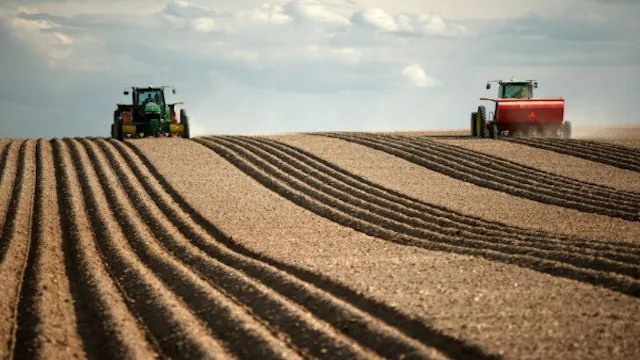
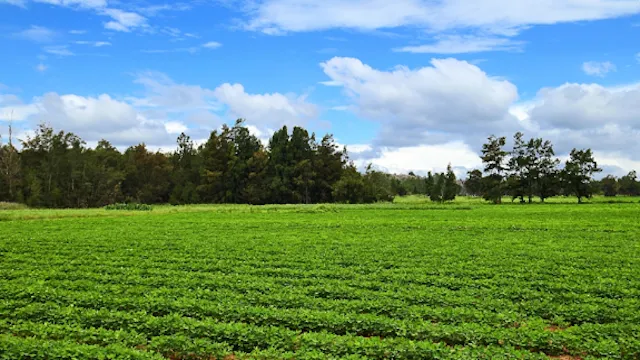
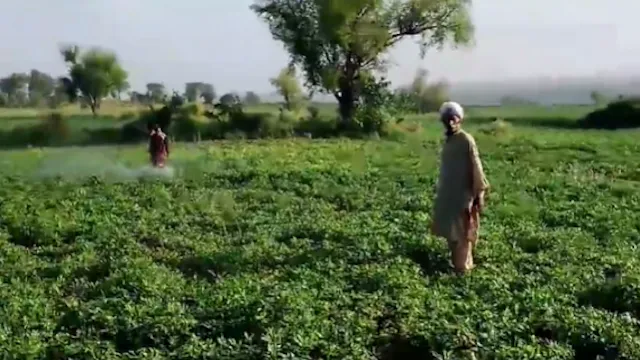
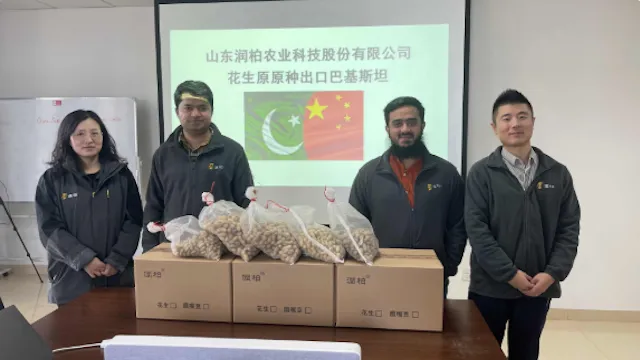
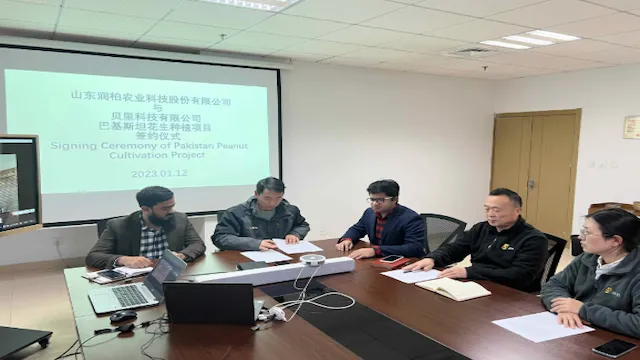
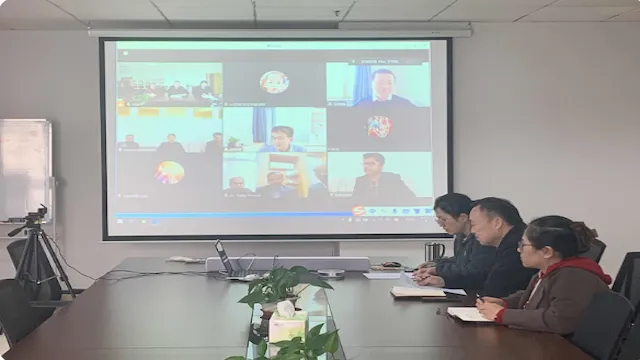
VIII. User Feedback Summary
Chinese technology has not only increased farmers' income, but also helped us reduce dependence on imported edible oil. This is a true win-win cooperation.
—— Mahmood, Pakistani Project Coordinator
Chinese peanut seeds have high yield and strong disease resistance. The guidance from technicians is very practical, and the income per mu has nearly doubled compared to before.
—— Farmer from Punjab Province
It has provided key support for Pakistan's agricultural upgrading.
—— Pakistani Minister of Commerce
It has provided a replicable model for China-Pakistan agricultural scientific research cooperation.
—— National University of Sciences and Technology, Pakistan
IX. Participating Organizations
Leading Enterprise
Shandong Runbo Agricultural Technology Co., Ltd.
Scientific Research Support Institutions
Shandong Academy of Agricultural Sciences, Chinese Academy of Agricultural Sciences, Weifang Academy of Agricultural Sciences, Qingdao Sea Rice Research and Development Center, Weifang Key Laboratory of High Oleic Acid Peanut Breeding
Platform Support Institutions
Weifang National Agricultural Comprehensive Development Zone Promotion Office, Weifang China-Pakistan Agricultural Cooperation Center