Gansu Wuwei Liangzhou District Corn Smart Drip Irrigation Technology Thousand Acre Demonstration Zone
Innovative Practice of Agricultural Water Conservation and Intelligent Irrigation in Arid Areas
As part of the national key R&D program "Key Technologies and Equipment for Intelligent Farmland Irrigation" during the 14th Five-Year Plan period, a thousand-acre demonstration zone was established in Wangjingzhai Village, Liangzhou District, Wuwei City, Gansu Province. This zone integrates, demonstrates, and exchanges key technologies and models for intelligent drip irrigation of corn in inland arid areas, aiming to address the severe water scarcity and the complete dependence of corn production on irrigation in the region.
In response to the local climatic characteristics and agricultural production challenges, the project team has developed and applied a series of innovative technologies and equipment:
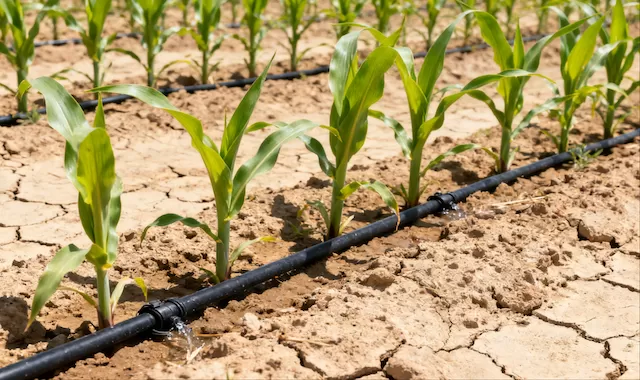
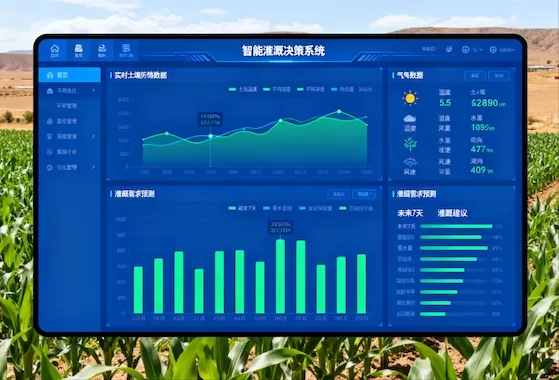
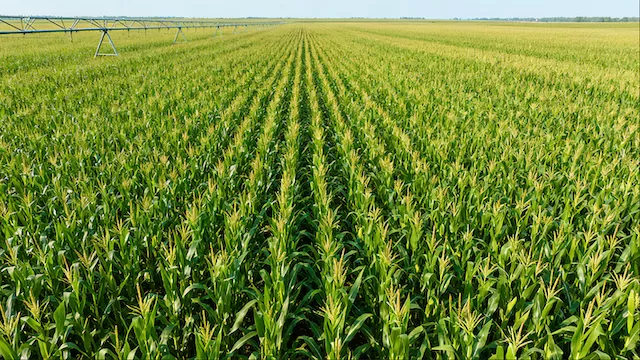
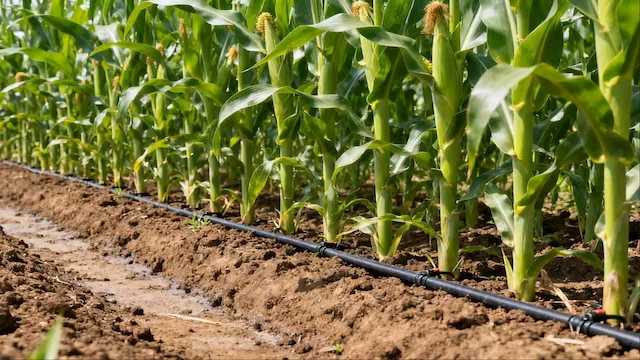
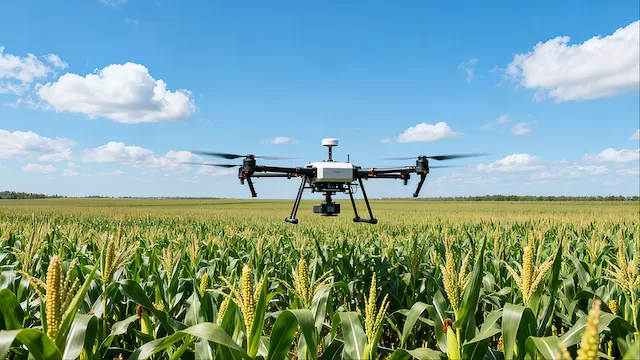
Addressing the challenges of Wuwei's continental arid climate and strong winds, the demonstration zone has developed and applied a corn shallow-buried drip irrigation planting technology system and a farmland intelligent irrigation decision-making system. This system can real-time monitor soil moisture, crop growth status, and meteorological data to achieve precise irrigation.
The project team has developed a series of independently researched equipment systems, such as plant canopy phenotyping collectors, intelligent irrigation gateways, integrated sluice gates for channel intelligent flow control, and intelligent flow measurement columns. A tailor-made intelligent irrigation decision-making system has been created for the local area, effectively addressing the challenge of water resource scarcity.
Wangjingzhai Village, Liangzhou District, Wuwei City, Gansu Province
1300 kg/mu
Corn yield in the demonstration zone in 2024, an increase of over 20% compared with ordinary farmers' planting
280 m³/mu
Average water consumption per mu during corn growth period, with greatly improved water use efficiency
Formed an integrated technology model with adaptability for large-scale promotion
Providing a demonstration for sustainable agricultural development in arid areas
Improved Water Resource Utilization Efficiency
Through intelligent drip irrigation technology, precise water distribution is achieved, significantly reducing evaporation and seepage losses. This enables limited water resources to maximize their benefits, providing a sustainable solution for agricultural water use in arid areas.
Innovation in Agricultural Production Methods
The application of intelligent monitoring and automated control technology has transformed the traditional experience-based irrigation model, realizing data-driven scientific decision-making. This reduces the labor intensity of farmers and improves the modernization level of agricultural production.
Enhanced Food Security Assurance Capacity
Against the backdrop of increasingly constrained water resources, corn yield has been increased through technological innovation, providing strong support for ensuring regional food security and demonstrating the role of science and technology in promoting agricultural development.
This model provides "clear accounts of irrigation water" for agricultural and water conservancy extension staff and farmers, making irrigation management more scientific and transparent. It helps farmers clearly understand irrigation needs and water usage, achieving the dual goals of water conservation and yield increase.
—— Implementation Effect Feedback
The successful experience of the Thousand-Acre Demonstration Zone for Intelligent Drip Irrigation Technology of Corn in Liangzhou District, Wuwei, Gansu provides a replicable and promotable technical model for agricultural water conservation and efficiency improvement in arid and semi-arid areas of northwest China. In the future, efforts will be made to further optimize the technical system, reduce application costs, and expand the promotion scope. This will help more arid areas achieve sustainable agricultural development and contribute to national food security and water resource security.